Terika’s Story
A shower fall in 201- left Tarika with third-degree burns to 20% of her body, beginning a long and challenging journey.
What happened?
2010 was a wild time. I was living in Darwin when, on 12 September, I fainted in the most unlikely place, the shower. Even though the water was cold, when I fell, I struck the hot-water tap and was left unconscious for around 15–20 minutes. By the time I woke, 20 per cent of the left side of my body had sustained third-degree burns.
No one found me right away. When I eventually regained consciousness, I felt hot with a sudden burst of energy. Still naked, I started walking around, my body constantly switching between feeling hot and cold. When my body began to heat up again, I thought I’d take another cold shower to cool down. But I collapsed and couldn’t move the left side of my body. On the ground, I tried moving my left foot — nothing. Then my left arm — nothing.
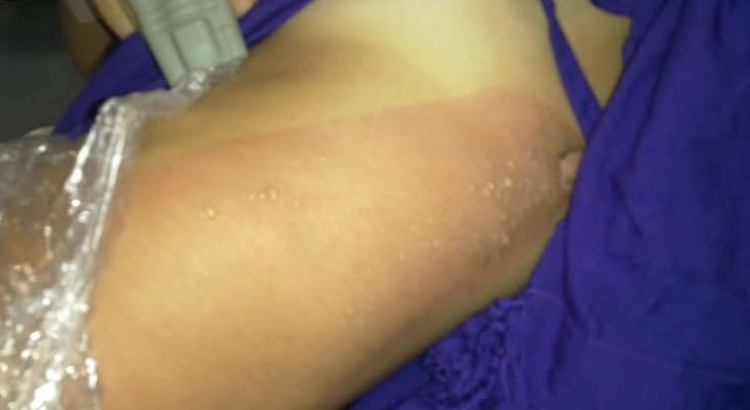
It was at that point that I heard my housemates downstairs and called for help. One of them contacted her sister, who worked in the emergency department. She recognised straight away that I had been burnt and instructed them over the phone to place me under a cool shower for 20 minutes. They sat me on a chair under the running water, and once the time was up, they wrapped me in Glad Wrap and drove me straight to the hospital. We only lived five minutes away, so that quick response made all the difference.
A later check for a hot-water valve confirmed that one was installed, but the temperature had been set to 70 degrees.
Treatment and recovery journey
Hospital treatment (Darwin, 2010)
I spent 19 days in Darwin Hospital and had only one surgery, as the graft took 100 per cent to its new area. The first time I saw my skin, I was told the grafts had taken completely. To make that happen, I had to lie on one side for five days without moving, giving the new skin the best chance to heal. The next day, I was discharged. I was admitted to the hospital, weighing 55 kilograms, and had lost 6 kilograms during those 19 days, leaving the hospital at just 49 kilograms.
Recovery in Darwin
Leaving the hospital was only the beginning of rebuilding myself. For the next two years, I wore a three-piece pressure suit through the Northern Territory’s wet season. It was uncomfortable and exhausting, but part of the process. My hair kept sticking to the suit when I slept, so I just cut it off.
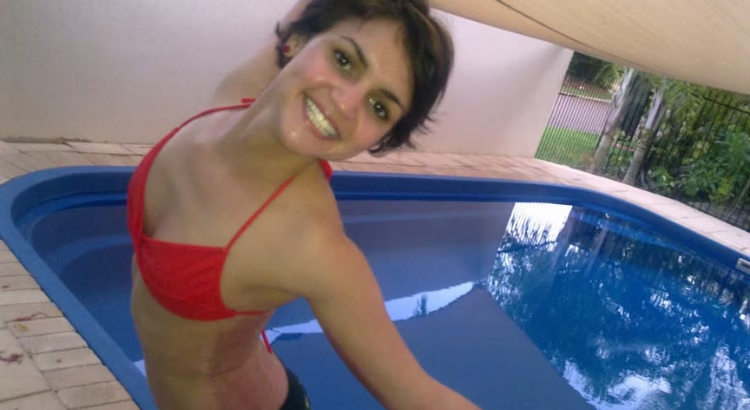
Months after surgery, I finally got the all-clear to swim, which helped stretch my skin. It took that long because there were still open wounds across my donor sites, and the blood clots needed time to heal. After losing a significant amount of weight in the hospital, I began CrossFit to rebuild my muscle and regain my strength.
Those early years were tough, filled with tests to understand why I fainted, and learning to live with PTSD and anxiety while coming to terms with how I looked.
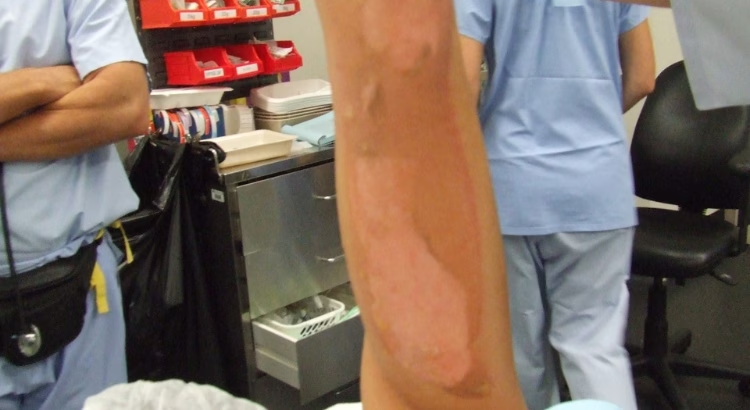
In 2015, I began receiving care from the Burn Service of WA at Fiona Stanley Hospital under Fiona’s team. I first connected with them after seeing a Facebook post about treatment for keloid scarring. By that stage, it had been around four years since my injury, and my grafts had stopped healing and remained full-thickness. My arm was constantly sore at one point; I even asked about amputation, and the skin on my left flank had become raised and bubbly.
Fiona’s team performed another surgery using spray-on skin to support healing in the damaged areas. Unlike many, my procedure only took 20 minutes. Straight after, I was tired and sore, but when the bandages came off for the first time, I saw what spray-on skin really looks like once it’s cleaned up.
Following that, I underwent a series of six laser treatments using the only machine of its kind in Australia to help flatten the scarring and improve the texture and movement of my skin. The laser changed everything for me.
I was living in Perth at the time, and although my family was still in the Northern Territory, attending appointments on my own became second nature. Mum flew down for one of the hospital visits. Those fasting mornings and early starts were tough, but they were worth it.
Life now
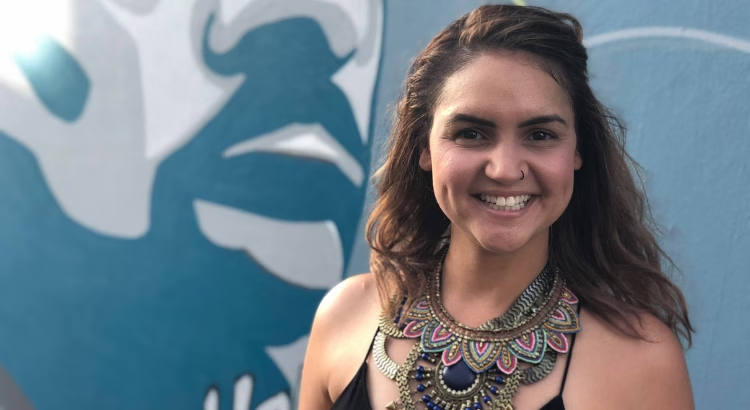
My journey is still unfolding. Life after burns is lifelong; it changes how you see yourself, how you move through the world, and what matters most. I still live with PTSD and anxiety, but I’ve learned to face them with compassion and courage.
By sharing my story and photos, I wanted to give people a real glimpse into what recovery looks like, the challenges, the progress, and everything in between. Coming to terms with how I look now hasn’t been easy, but if speaking out helps even one person feel that things will be okay, then it’s worth it.
Taking part in the Central Park Plunge 2025 is my way of giving back to the Fiona Wood Foundation — the people who helped me through my recovery. I’ve always wanted to donate blood (I’m O-negative, the unicorn of donors), but because of my surgeries and “shy” veins, I can’t. So instead, I’m raising funds to bring hope to the next “Terika,” whose story hasn’t even started yet.
I can be described as extra and confident, but I actually hate heights, so abseiling down one of Perth’s tallest buildings will be a real challenge. Still, if facing that fear and using the support I’ve received over the years can help enable more burns research and care for others, it’s completely worth it.