Kevin’s Story
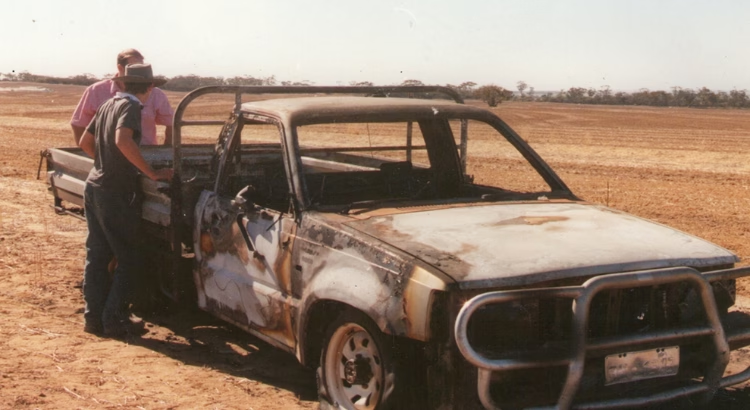
Kevin was working on his family farm when a fuel container in the back of his vehicle tipped over and ignited.
What happened?
Kevin was working on his family farm in the Bruce Rock and Merredin Shires when a fuel container in the back of his vehicle tipped over and ignited. The fire started at the rear of the vehicle. As a fully trained volunteer firefighter, he quickly realised the situation was out of control. The brake lines had already burned through, so he shifted through the gears to slow the vehicle as flames filled the cab.
Travelling at around 20 to 30 km/h, Kevin opened the door, rolled through the flames and somersaulted beside the burning vehicle. He hit the gravel hard but managed to land on his feet and run. At the time, he did not fully register the severity of his injuries, but he could see the skin on his arms peeling away as he ran to the firefighting unit in the corner of the paddock.
Fortunately, he was in the property’s closest paddock to Bruce Rock Hospital. It was a Saturday afternoon, only two nurses were on duty. Drawing on his own training, he knew the importance of immediate water cooling and asked to be placed under a shower. Ironically, one nurse had only just seen a first aid segment on television and immediately put cooling measures into action, while the other contacted Royal Perth Hospital to organise his transfer. The Royal Flying Doctor arrived with a doctor and another nurse, he was prepared and kept stable until he could be flown to Perth’s Burn Service of WA. He recalls hearing a nurse in A&E shouting at him to “breathe!” a voice that stayed with him as he slipped in and out of consciousness.
Kevin sustained burns to 35% of his body, including his face, hands, arms, back and shoulders. He credits his long cotton pants and cotton shirt with saving his life. He believes the outcome would have been fatal if he had been wearing synthetic fabrics or shorts. Where his shirt rode up during the fall, exposing his back and shoulders, the burns were much more severe. A long sleeved shirt would been much better.
Treatment and recovery
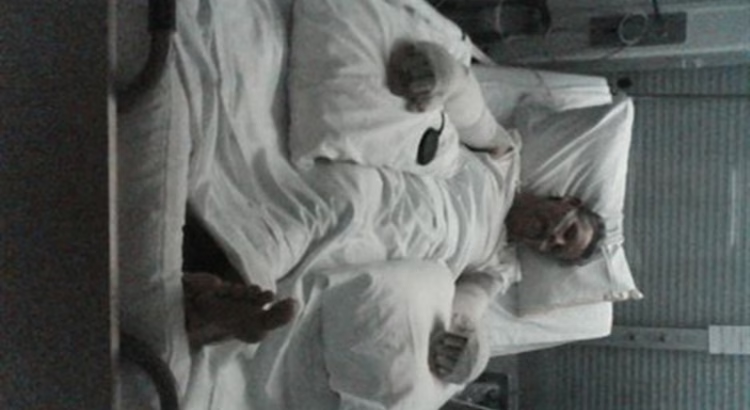
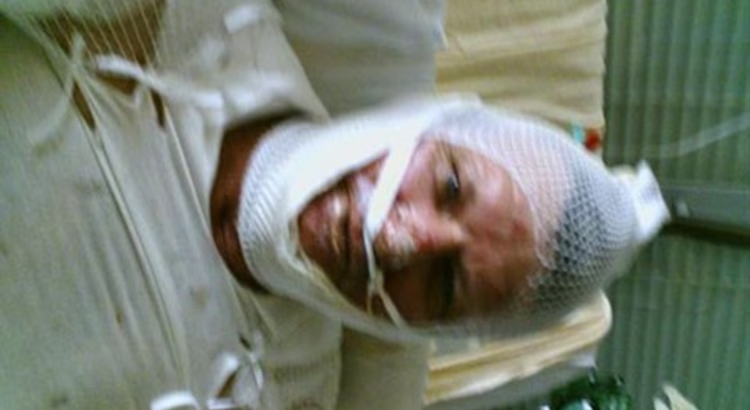
Kevin was airlifted to the Royal Perth Hospital Burns Unit, where he underwent intensive treatment. He received traditional skin grafts, with donor skin harvested from his legs. He was also part of early trials using RECELL®, the Australian-developed spray-on skin technology, and recalled a particular graft site where the cells were applied—it was noticeably less painful than others.
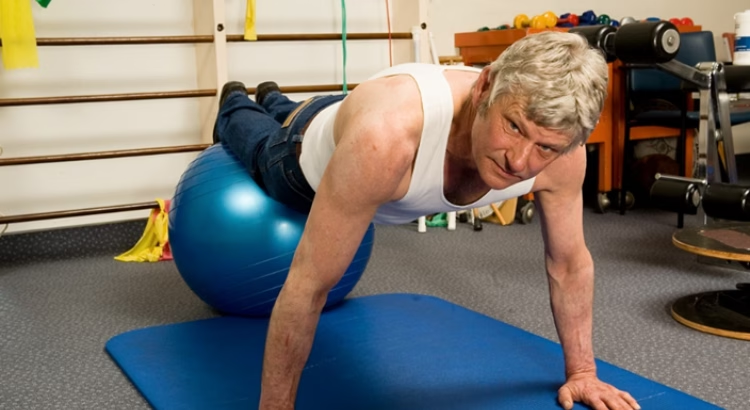
He wore pressure garments and began a structured rehabilitation process that continued for years. Kevin credits the burns unit’s team-based approach as key to his recovery. Physiotherapists, OTs, nurses and doctors worked closely together, with physios fully informed of the medical plan. They returned him to the medical team if something doesn’t look right during a session. He remembered tracking his strength and flexibility on a progress chart, gradually returning to near normal.
The rehab was demanding, but Kevin described it as essential. One personal disappointment was not regaining the ability to walk on his hands, something he used to do easily. Still, as he put it, “That rehab is what brings you back.” He continued to return for check-ups and biopsies long after discharge, remaining actively involved in his recovery. In his words, the combination of research, expert care, and rehabilitation made it possible to begin life again with a new kind of normal.
Changing lives
Kevin’s injury was life-altering, not just physically, but in how it reshaped his future. While he remained connected to the farm and his roots in regional WA, much of his time after recovery was spent in Perth for ongoing treatment and rehabilitation. He spoke candidly about the challenges of being a rural patient navigating a city-based health system, often having to travel himself when others from the country couldn’t make the trip. This experience gave him an understanding of the gap between metro services and rural communities. It also sparked a new direction. Kevin nominated and was elected to the board of CBH, he nominated thinking “If I do nothing, I’ll spend the rest of my life wondering whether I could’ve made a difference.” He was elected and served 15 years as a non-executive director. He became a strong voice for safety in agriculture, using his personal story to deliver powerful presentations that helped others understand the real consequences of unsafe practices.
Life now
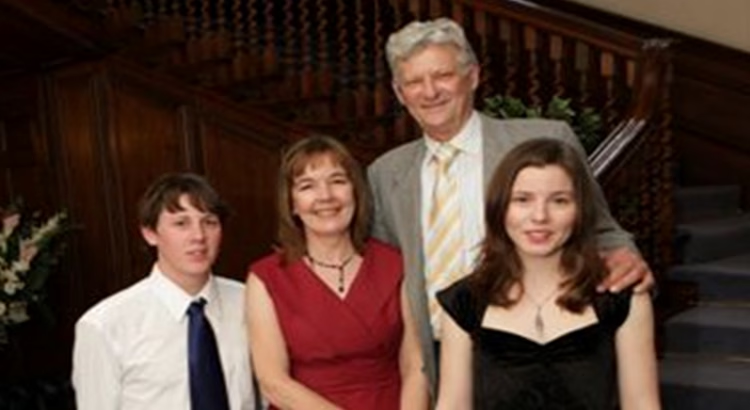
But Kevin is the first to say he didn’t do it alone. He credits his wife, Jane, and their children, Lucy and Josh, for getting him through. “Without them, I couldn’t have made it,” he said. Their support and the drive to secure a future for his family and their farm kept him going during the most challenging parts of recovery.
He often reflected on how the trajectory of their lives could have changed if he hadn’t survived: the farm sold, opportunities lost, everything altered. That thought and the support of his loved ones gave him purpose and fuelled his commitment to give back to his community, the burns research that saved his life, and the people who walked the journey with him.